Furnace replacement
Furnace installation and replacement in Cleveland
A new furnace is a twenty-year decision made, too often, on the coldest night of the year. This page walks through the choices so the call goes further.
When replacement comes up
Contractors raise it when a repair would cost a large share of a new unit, when a heat exchanger is cracked, when parts for an old model are hard to get, or when the furnace has simply run through many winters and keeps needing visits.
Some owners replace on their own schedule: before listing a house, after finishing a basement, or when adding central air makes it sensible to replace both halves of the system together.
Standard or condensing efficiency
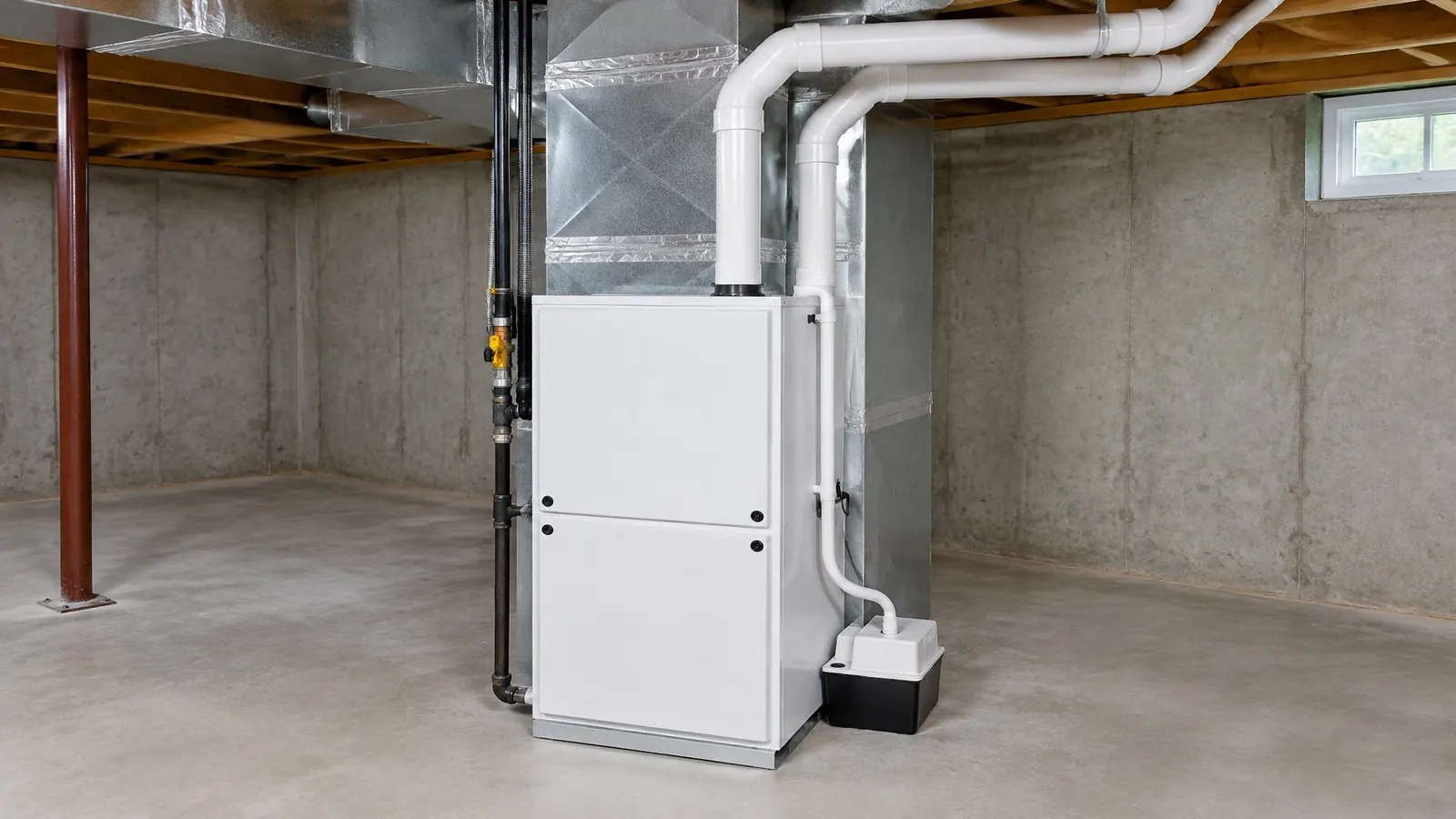
A furnace's efficiency rating, called AFUE, is the share of the gas it burns that ends up as heat in the house over a season. Standard units send hot exhaust up a chimney. Condensing units pull so much heat out of the exhaust that water condenses inside them, and the cooled gases leave through plastic pipe out a side wall.
That difference reaches into the house. A condensing furnace needs a drain for its condensate, and often a small pump if no floor drain is close. Its vent pipes need a route to an outside wall, clear of windows, the gas meter and the snow line.
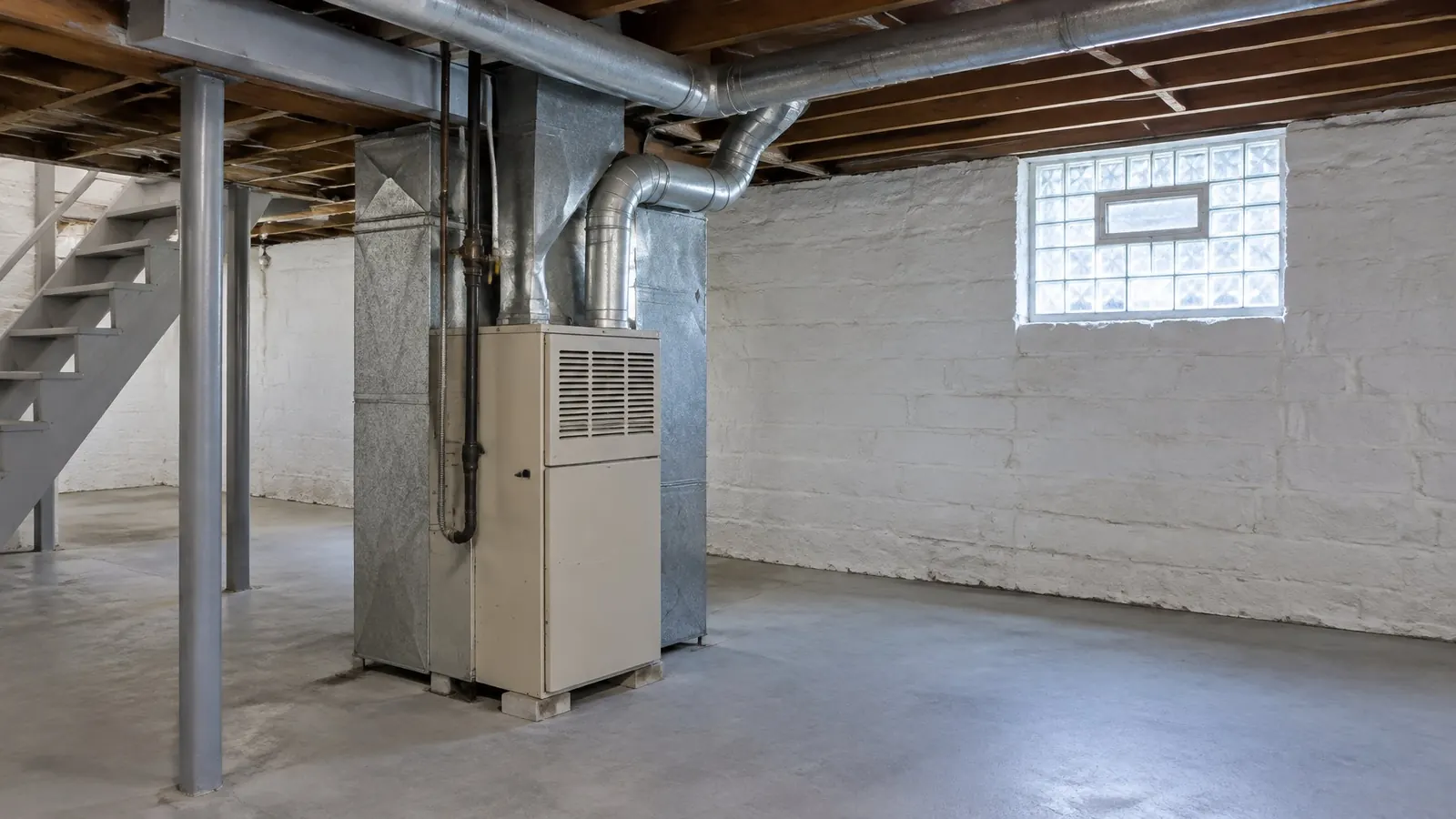
In older Cleveland houses the chimney may also vent a gas water heater. Take the furnace off that chimney and the water heater is left alone in a flue sized for two appliances. Ask the contractor how they will handle it.
Sizing is a calculation, not a guess
The old furnace's size is a poor guide. Many were sized generously decades ago, and since then the house may have gained insulation, storm windows or new siding. A room-by-room heat loss calculation, often called a Manual J, sizes the new unit to the house as it is now.
An oversized furnace heats the house in short bursts, cycles more, and leaves rooms far from the furnace cooler than the hallway with the thermostat.
One stage, two stages, or modulating
A single-stage furnace is either fully on or off. A two-stage furnace runs on a low fire most of the winter and steps up on the coldest days. A modulating furnace adjusts its flame in small steps.
The smoother the burner, the longer and quieter the run times and the more even the temperature from basement to third floor. The trade-off is price and a more complex control board.
Ducts and return air in an older house
Houses converted from older heating systems often have few return-air paths, so the furnace starves for air. A new furnace connected to the same thin returns can run hot and noisy.
Ask the contractor to look at the return side as well as the supply trunk. Cleveland's permit page lists new, extended or repaired ductwork as permitted work in its own right.
Pairing the furnace with central air
The indoor cooling coil sits on top of the furnace, and the furnace blower moves the cooled air. If the air conditioner is near the end of its life, replacing the coil and condenser at the same visit avoids pulling the new furnace's plenum apart a year or two later.
The central air installation page covers the cooling half.
Permits and inspections in Cleveland
The city's Department of Building & Housing requires a permit for the installation or replacement of a furnace. Contractors must be bonded, insured, licensed by the State of Ohio and registered with the City of Cleveland. Owners doing the work themselves do not have to register.
The department's FAQ gives a number for confirming a contractor's registration: 216.664.2884. Suburbs keep their own lists, covered on the area pages.
What moves the price
No two quotes for a furnace swap in Cleveland look alike, because the house shapes the job as much as the equipment does. These are the items that shift the number most.
Cost drivers
- Efficiency class, and whether new venting and a condensate drain have to be added.
- Burner type: single-stage, two-stage or modulating.
- Capacity from the heat loss calculation.
- A chimney liner for a water heater left behind.
- Changes to supply ducts, returns or the plenum.
- Access: narrow basement stairs or a furnace in a tight closet.
- Permit fees, a new thermostat, and hauling the old unit away.
- Timing. A planned swap in October leaves more room to compare than a no-heat night in January.
A typical install day
Gas and power off
The installer shuts the gas valve and the furnace switch and disconnects the old unit.
Old unit out
The cabinet comes apart and goes up the basement stairs, along with any venting that changes.
New unit set
The furnace goes on a level base, with the plenum and return connected and sealed.
Gas, vent and drain
Gas piping is tied in and leak-tested, vents are run, and a condensing unit gets its drain line.
Start-up
The installer checks gas pressure, temperature rise and safety controls, then sets the thermostat.
Inspection
Where a permit was pulled, the city inspects the work after it is done.
Questions for the written proposal
- Which model and capacity, and how was the size worked out?
- Who pulls the permit, and is its cost included?
- What happens to the chimney and the water heater vent?
- Does the price include duct or return changes, a condensate pump, a thermostat and removal?
- Which warranty registration steps fall to you, and which to them?
Questions
Can a furnace be replaced in the middle of winter?
Yes. Contractors do it all season. The house goes without heat for part of a day, so plan for pets, pipes on outside walls and anyone who feels the cold.
Do I need to replace the ductwork too?
Usually not all of it. Leaks, crushed runs and missing returns are the common fixes, and a contractor can show you which sections matter.
Is a bigger furnace safer in a cold city?
No. Size it to the calculated heat loss. Extra capacity mostly adds short cycles and uneven rooms.
Furnace out, or the central air quit?
Ring the number below. An independent HVAC contractor serving Cleveland and its inner-ring suburbs hears out the problem and sets up the visit with you.